CBTC, ETCS, or PTC: Which Train Control Architecture Fits Your Network?
CBTC, ETCS, or PTC isn't a technology debate, it's a geography and regulation one.
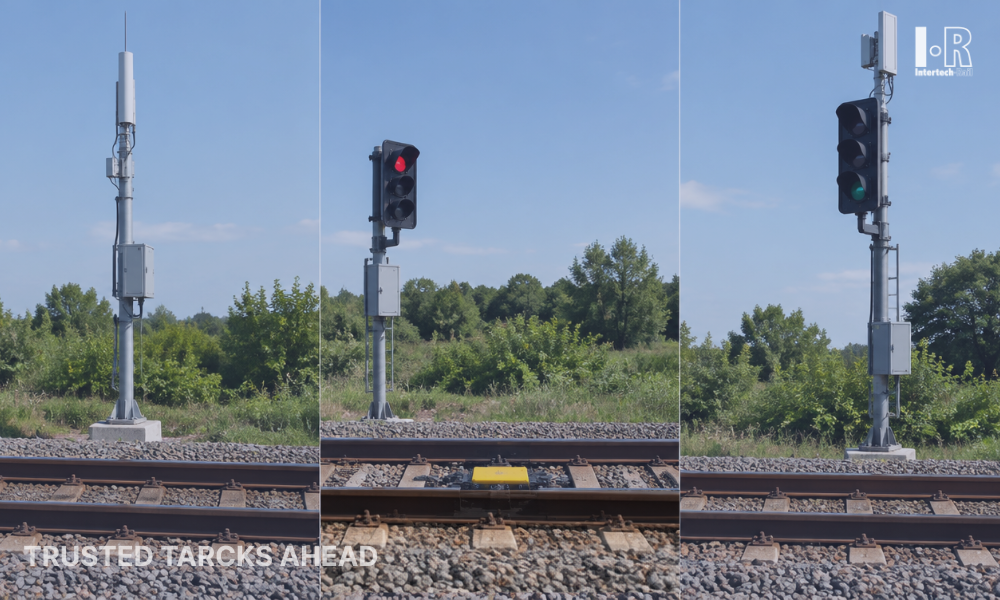
Sit in on enough signaling planning meetings, and you'll notice the same argument resurface every few years, usually dressed up as a technical debate when it's really a geography and regulation debate wearing a technical costume. CBTC vs ETCS isn't really a fair fight in most cases, because the networks asking the question rarely have the same problem to begin with.
Why networks face this choice
What problem is each architecture designed to solve?
Capacity drives metro decisions. Collision avoidance and regulatory mandate drive freight and mainline decisions. That difference alone explains why the three architectures rarely compete head-to-head in the real world. Geography and regulation, more than engineering preference, decide which door a network walks through.
What do all three share underneath?
Strip away the branding and all three do the same three things: positioning, movement authority, and onboard enforcement. The differences are in how they implement each piece, not in what they're fundamentally trying to achieve.
The three architectures in practice
How does CBTC work and where is it used?
CBTC runs on moving block and continuous radio communication, and it's why dense metro systems can run trains close enough together to move the volumes they do.
CBTC railway system deployments are almost always segregated, enclosed networks, which makes the continuous radio requirement practical rather than a liability.

How does ETCS work across its levels?
ETCS Level 1 overlays existing signaling with balises transmitting movement authority. Level 2 removes most of the lineside signals and relies on continuous radio through the RBC. Balise placement and accuracy matter enormously here, since the whole positioning model depends on them. That's the gap Intertech Rail's Balise System for ATP/ATO is built to close: tags rated for the environment they'll actually sit in, like the Harsh Environment Tag and the Signal Tag, paired with onboard hardware like the Multiprotocol Reader and antennas sized for the application, from the Compact HE Antenna to the Heavy Rail Antenna.
How does PTC work in North America?
PTC is fundamentally an overlay architecture, layered on top of existing dispatching and signaling rather than replacing it outright. The mandate scope was narrower than a full CBTC or ETCS rollout, which is exactly why interoperability between different railroads running PTC became such a central engineering problem in its own right.
Comparing the options
How do they differ in cost, capacity, and infrastructure?
A comparison table earns its place here more than prose does: block type (moving vs. fixed with overlay), trackside needs (continuous radio vs. balises vs. existing signals), and capacity gain (highest for CBTC, more modest for ETCS Level 1, minimal for PTC by design). Onboard retrofit effort follows the same pattern: CBTC and ETCS ask more of the fleet; PTC deliberately asks less.
What does each one demand from the detection layer?
Track circuits and axle counters still matter under all three; they didn't disappear just because a newer control layer arrived. PTC vs ETCS comparisons often skip this, but balise positioning accuracy under ETCS, and reliable detection feeding any of the three, are what the whole safety case rests on underneath the marketing name.
Making and staging the decision
Which factors should decide the architecture?
Traffic type first: a metro doesn't have PTC's problem, and a freight-heavy mainline rarely has CBTC's problem. Network mix, regulation, and cross-border needs narrow it further, especially in regions where trains cross from one national system into another. A train control system comparison exercise that skips regulation usually gets overruled by it later anyway.
Phased, overlay-first strategies tend to age better than a full rip-and-replace. Starting with what's mandated, then adding capacity-driven capability where traffic actually justifies it, keeps the investment aligned with the problem each network is actually trying to solve.
GO DEEPER ON THESE TRACKS: choosing a train control architecture ties into automation targets and the block strategy already in place. Explore What Are the Grades of Automation (GoA 0 to GoA 4) and What Does Each One Require? for the automation side, discover Fixed Block or Moving Block: How Does Block Design Limit Your Line Capacity? for the block strategy behind it, and review How Do Railways Confirm That a Complete Train Has Cleared a Section? for the integrity function these architectures need. These related articles are already published or will be available soon.
What is Automatic Train Control (ATC) and how does it work?
Automatic Train Control (ATC) is a railway safety system that supervises train operation by enforcing speed limits, movement authorities, and operating restrictions. ATC continuously monitors train performance and can automatically intervene when a train exceeds authorized operating conditions or approaches a hazardous situation.
Why is Automatic Train Control (ATC) important for modern railway operations, and what challenges can it solve, and what benefits does it provide?
ATC improves operational safety by reducing the risk of human error and helping ensure compliance with operating rules. It supports more consistent train performance, enhances network capacity, and provides additional protection against overspeed events, signal violations, and unsafe train movements
What technologies are commonly associated with Automatic Train Control (ATC)?
ATC systems typically use onboard computers, speed sensors, trackside signaling equipment, communication networks, balises, train detection systems, and centralized control software. Many modern ATC implementations also incorporate digital communications and integration with broader train control architectures.
What Intertech Rail solutions are available for Automatic Train Control (ATC)?
Intertech Rail supports ATC-related infrastructure through signaling relays, wheel sensors, switch machines, and railway control hardware. These field-level components contribute to the reliable operation of signaling and train supervision systems that support automatic train control functions.
Share article